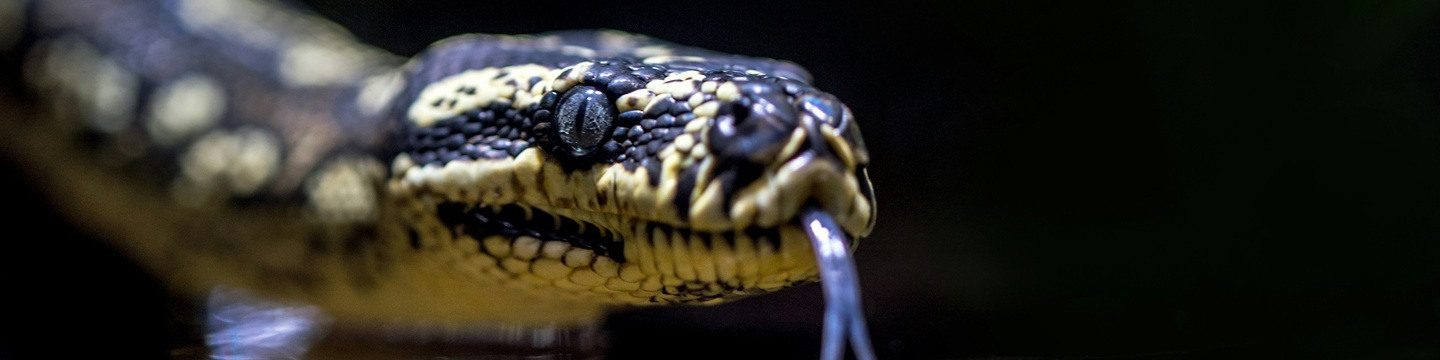


Galileo
Fiction by Aliyeh Ataei
Translated from the Persian by Salar Abdoh
Zia’s message to the boss said: I made it to Reza Azam’s party at his villa in Lavasan. The boss was Boss Shadan, who’d been worried Zia might not get to the party. There must have been around two hundred guests—one of those aimless socials that the people of Tehran were so drawn to and Kabul folk were just starting to imitate nowadays. Zia had hurried all the way from Birjand to make it there. If he could only peddle his last animal, he’d earn himself a good fifty, sixty million in Iranian toman. Before Birjand, he’d made a dash into Iran across the Afghan border with a hawk, two eagles, and a tri-colored python in tow. There were a couple of nerve-racking nights on the Iranian side while he evaded the border police. The hawk turned out to be a pain and refused cat flesh. Which meant two hundred thousand toman spent on beef. The eagles scarfed around a hundred thirty thousand toman each, with the female turning out to be the more gluttonous of the two. As for the python, each of its weekly meals meant freshly cut chicken. But at least the hawk and the eagles Zia had managed to sell quickly in Birjand. The real buyer behind the deal must have been a Gulf Arab, he figured; they were the ones with big money and so into birds of prey.
Now only the python was left. He put the snake in a suitcase and brought it to Tehran. But he wasn’t exactly dressed for Reza Azam’s party. Boss Shadan had said Tehran’s wealthiest would be there. What was Zia to do with the grimy clothes he’d worn ever since leaving Ghazni in Afghanistan? He had to buy himself new clothes once he got to the capital, somewhere uptown, close to the party. But when he found out how much firsthand clothes cost in this city, he decided to forget about it.
He also let Maria know he was back. Three years ago, he’d brought her a baby alligator, but the animal didn’t last long. The lonely old woman still needed an ear now and then, and they hit it off. Staying at Maria’s place was convenient, and Zia made sure to give her a little extra for his room and board. He always introduced himself to people as an “animal consultant,” and in the six years since his wife and daughter had left for Austria, he’d managed to make a good living in the trade. Having a family had stood in the way of making real money. When his wife started grumbling about the war, Zia welcomed the idea of them leaving. The war was only an excuse, he felt. Had Afghans ever known peace? You could only be dissatisfied with something if you’d seen better. Zia’s business soon took off, and in the chaos that followed the fall of the Taliban, he managed to put away a nice nest egg for himself.
The animals came from different places. The hawk was from Bukhara in Uzbekistan, the python came from India, and the eagles he’d bought for just a thousand afghani each in Farah, Afghanistan. The python was a challenge. He was lucky to sell the other three animals so quickly. He knew if there was one place he could sell a snake, it was Tehran—all those rich kids always throwing away their daddies’ fortunes. Maria, too, could always find him customers. But ditching a snake was not so easy, and this time he’d had to call in a favor with Boss Shadan, who trafficked in humans, rice, wheat, oil, animals, and guns.
From Boss Shadan, the way led to Reza Azam. Just another guy with suspect money in this huge city.
Maria gave him the address of a secondhand shop on Rudaki Street. Walking down the buckled staircase of the old store, he had no hopes of finding anything, but he managed to come out of there wearing a Gabbana tie and a Maxim jacket. Maria also gave him the address of a secondhand shoe store, but he had no luck this time. Zia was forced to visit one of the shops near Ferdowsi Square and pay for a new pair of leather shoes. He made sure to tell the shop owner that Iranian cows didn’t have good hides. “If you want to see real cows, just come to Ghazni!” Afterward, he went straight to Maria’s place in the Karim Khan district and installed himself on the first floor of her old house off Aban Street—an alleyway that ended in a park with a fountain, where Maria’s alligator had breathed its last.
He took a quick shower, grabbed the suitcase, and called for a cab to the address in Lavasan. Once there, he started touting the animal right away. He ate dinner three different times with three different people, opening the suitcase now and then to show off the python’s shiny, beautiful skin. A young woman offered six million instead of the fifty he was asking. Zia laughed. “A python from India for only six? This thing is already three months old. Its egg is worth more than what you’re offering.”
It slowly began to dawn on him he wouldn’t find a buyer here. Everyone was interested. They came, looked, asked questions—was it male or female? What did it eat? These people were all right. Rich enough that they could afford to be “nice” to an Afghan man with an accent. He tried to at least enjoy himself. You only had to look at the money the guests had spent on their clothes to know shelling out fifty million for a snake was nothing to them.
When Zia got back, Maria was still up. As always, she was listening to old Armenian songs, though the only time she became truly nostalgic was when she talked about her dead alligator. She invited Zia upstairs for coffee, but without the snake. Snakes didn’t have legs, she said, and reminded her of her poor mother, who couldn’t walk during her final days.
Later, before going to sleep, Zia opened the suitcase and pulled open the dusty curtain so the reptile would see sunshine. And in the morning the python was already by the window rubbing its head against the glass. The backyard was a tangle of weeds, years since anyone set foot there. Might not be a bad idea to open the window and let the snake crawl out for some fresh air. But he didn’t dare. There were apartment buildings across from here, and Maria had already warned him about neighbors going ballistic when they’d caught a glimpse of her alligator down in Warsaw Park. Maria, he knew, wasn’t one to exaggerate. If a woman like her, who’d managed without a husband or child all these years, warned you to be careful, she wasn’t playing around. As a Christian, she understood what it meant to live on the margins here—even if she could never understand what it was like to be an Afghan. It would have done no good trying to explain his own hovel of a country to her or anyone else. So Zia kept his story to a minimum, a few words about how his family was long gone and he’d never get to see his daughter grow up. Both he and Maria had sighed for a fraction of a second, and that was it.
There was a bakery on Aban Street where the head baker threw away perfectly good leftover dough. Zia imagined the python might like dough balls. But standing in line waiting for bread, he didn’t dare pick the dough off the ground. He could tell from the man’s glance that that was a red line here. In Tehran, you were always walking on the tightrope between kindness and unkindness when people picked you out for an Afghan. One wrong move and somebody was bound to shout, “Watch yourself! You’re in Iran now."
I’ll just stick to chickens, Zia thought.
He sent a text message to Boss Shadan, who wrote back immediately: A buyer has shown up at Reza Azam’s house. Reestablish contact.
He packed the snake and grabbed a cab. The animal seemed to understand what was expected of it and curled itself easily into the suitcase. More than halfway to Lavasan, a text came from Reza Azam telling him not to bother, the buyer had had to leave. Miffed, Zia told the driver to drop him off at nearby Lavizan Park. The driver gave Zia and his suitcase strange looks, but Zia still managed to handle the suitcase as if it were empty. He rolled his burden up the park steps and found a quiet spot to let the snake out for a bit. The reptile crawled out hesitantly and took in its surroundings before inching its way forward on the soil. Two guys sat under the shade of a tree singing. Zia walked in the opposite direction and the snake followed. It was a nice feeling having someone or something follow you like that. It made him think of Shabnam, his wife; she had walked so carefully and deliberately behind him that day they’d gone shopping for a new watch for their wedding. Even his own mother and aunt had been impressed by her. It dawned on Zia that he had hardly thought of his wife until today. And good riddance! How could he forget that as soon as the Taliban got within striking distance of Ghazni, she’d forgotten all his hard work? The restaurant they owned belonged to both of them, and Zia had even bought a storage space for Shabnam’s father to make some sort of living. But no, all that mattered to her was to turn Zia’s labors into cash and beat it for Europe. She kept saying how Afghanistan was no place to live anymore. Zia disagreed. This was precisely the time to stay in Afghanistan. Taliban or no Taliban, business was starting to pick up. He had told her to at least let their daughter stay, but she’d have none of it. A child needs her mother, she’d said. Then the endless fights.
He looked up to see the snake pausing under a sign that said, Dogs Forbidden. What a joke! In Afghanistan, human beings barely had places to live, let alone dogs. No wonder you never saw signs like this over there.
He liked coming to Iran. Being here made him feel sophisticated. If someone spotted this poor creature in Ghazni or Kabul, they’d attack it with an ax or a shovel. But in Tehran, people took the python for something valuable, something to pay good money for. He noticed the snake was needling its tongue along the dirt, probably searching for water. He let it crawl in front of him until they reached a puddle of water. The snake took a while quenching its thirst, and Zia kept a careful watch on the surroundings the whole time. Maybe they would not attack a snake with picks and axes here, but unlike Afghanistan, this country had laws—they could do you a lot worse. The python finally finished drinking and then came and rested its head on Zia’s shoes. Zia stood over it; he had never seen the snake from this angle. The sun was hitting its scales, making them shine like emeralds. Parts of the skin were green, others gold, and yet others silver-like. What a truly magnificent animal!
He bent down to get a closer look. His wife would always tell him it was the look in his eyes that had originally made her fall for him. The first time they’d met had been at Zia’s nephew’s wedding, and like many Afghan men, he’d come to the ceremony with kohl around his eyes. She’d liked that. It didn’t take long for them to fall in love and spend their days at a local shrine where they’d tie wishing knots for a future together. Shabnam was shrewd enough to act like they’d never exchanged a word with each other, even after she found out she was pregnant and the wedding still hadn’t taken place. Zia smiled recalling how savvy his wife had been. But immediately he thought of their daughter, Sahra, and the smile vanished. He unzipped the suitcase and the snake quietly crawled back in its lair. Boss Shadan hadn’t lied; the snake was smart. Teach it something once and you didn’t have to teach it again.
He wrote to Reza Azam: Please don’t forget us. It’s not easy keeping this animal. He slogged with the suitcase down the park steps. Cars wouldn’t stop for him, so he walked on the shoulder of the freeway. The suitcase seemed lighter once he was walking on asphalt. He imagined the thing was sleeping. Did snakes even sleep? A large sign announced the name of the freeway, Martyr Babai. It was just the same in Afghanistan, he thought; after the last war with the Taliban, all the streets were named after people who fell fighting. But Afghanistan wasn’t a country with a whole lot of streets and freeways. At least not enough to compete with the endless supply of martyrs. They’d have been better off naming the streets after people who remained alive. It was a feat not dying in a place where, in the time it took him to get to Maria’s place, another few dozen martyrs might join the long list. He’d be the first to admit that the war hadn’t been bad for him. It had given him a chance to import cheap goods and export expensive things. He was making money, all right. But these thoughts still nagged at him.
He came to an overpass. They’d decorated its walls with turquoise-colored tiles and mosaic, and it reminded him of the tomb of the great Herati poet Khwaja Abdollah. He decided to take a selfie with the snake here and send it to Boss Shadan. He unzipped the suitcase, but the snake had coiled itself so tightly that its head was barely visible. Carefully, he grabbed it and took it out, pressing the python’s head against his own. Just then, a black Toyota SUV stopped in front of them, and a young guy stuck his head out the window.
“Hey, haji, will you let us take a picture too?”
He was startled at first, not wanting people to see him with the snake out in the open. But maybe the guy and his girl would turn out to be customers. Maybe he didn’t need a go-between for the python. He addressed the girl leaning on her boyfriend’s arm. “Dear lady, this poor creature of God’s is nothing to be scared of. He’s all of three months old and harmless.”
The girl laughed nervously. The couple got out of the car and came to sit next to the suitcase, where they all took a selfie with the snake. When Zia tried to move out of the frame, the snake rose up, and the girl ran off, scared. Laughing, the boyfriend told her to come back. She came back and pretended to be screaming while they took more pictures. This was Zia’s best chance to get a ride back to Maria’s place. On the way, he spoke nonstop about how truly great snakes were, how loyal and big-hearted. It was all made-up nonsense, but it worked. By the time he was getting off at Aban Street, the girl even asked if she could see the python one more time. She ran her hands over the reptile’s skin and gave it a longing look. Telephone numbers were exchanged.
Zia put this down as a good day. It was the first time he had actually met young people in this town he could call his friends. At Maria’s, he saw that the old woman had put out more chicken for the animal. He left the python with its food. When Boss Shadan had first told him the snake was as good as blind after eating, Zia had been alarmed. But then he saw that this animal did kind of freeze for a while, with its head held high, like it was some kind of statue.
More days passed with no customers. No sign of that young couple either. He called Reza Azam and was told he should find his own customers. Something was wrong with Zia, and he couldn’t figure out what. He no longer wanted to leave the house. When Maria wasn’t around, he’d let the snake out into the yard, where it would crawl on the dirt and stare into the distance as if it was in deep contemplation. Meanwhile, Zia thought more and more about his wife and his ten-year-old daughter, who had his mother’s hair and skin. This loneliness was something new, and he didn’t understand it. Tehran had turned into a dead-end where his life and the snake’s life were intertwined. Zia waited for a sign, any sign. And then a little ray of hope came his way.
Reza Azam wrote: I’m adding you to my Telegram app friends’ group. Send them your snake pictures.
The friends’ group had ninety-seven members. They posted the usual stuff – cars, music, funny videos, and poetry. Zia wasn’t sure how to begin. He took a picture with his cellphone when the snake had eaten and wasn’t moving much. Underneath, he wrote: Just ate. He’ll be like that for a while. For sale.
No response for about a quarter of an hour, and then a woman wrote: You’re not afraid?
Why should he be afraid? He had to be respectful when answering Iranian women. He decided to be polite and firm at the same time: Fifty million is the asking price. You will surely not regret it.
This opened up the conversation in the friends’ group, and Zia began elaborating. The python was like a blind man after eating, he said. Maybe he’s afraid of the camera. Right now, he’s like a statue . . . . They asked him about snakes in general, their lives. He didn’t have any answers but warmed up to the entertainment of it and started making things up. He likes watching television. If it’s a documentary on snakes, he gets agitated like he’s homesick. This got them; they posted heart stickers for the snake and sent it love. Zia was liking this. The next day, when the python moved a little, he took more pictures. He took one photo from an angle where the animal looked truly regal. He wrote: Today, he’s giving a lecture.
Almost everyone in the friends’ group had a comment. A little girl wrote below the photo: Resembles Galileo.
At first, he thought she meant the same “Galileo” in the cartoon that his daughter Sahra used to watch in Afghanistan. He looked up the little girl’s profile in the Telegram group and saw that her name was Setayesh and she had no resemblance to Sahra. The girl wrote again: For snakes, the earth is always round. Just like it was for Galileo Galilei. Isn’t that right? A snake never stretches totally straight, does it?
That did it. Starting the next day, he was an orchestra director leading the python to assume different shapes. He’d stretch the thing as straight as he could and lie next to it for selfies. The little girl responded with smileys and hearts. Zia was loving it, even if after so many weeks he still hadn’t been able to make money on the animal. A buyer called offering thirty million. But Zia thought the offer was low. After a while, the snake was too big for the small suitcase. The selfies started getting repetitious, and the friends’ group stopped responding to the photos. Zia went to the Manuchehri district and bought a bigger suitcase. Then he went to the City Theater, waited until everyone had left the auditorium, wrapped the snake around his neck, and took a picture.
Galileo goes to the theater.
He scripted Galileo’s theater visit, posting how it had stood erect in the dark of the theater to watch the play. The scripts began to get more elaborate with time. People were paying attention again. Sometimes, Reza Azam would write, telling him to hurry and sell the python. At other times, the rich man actually took the lead in the friends’ group praising Zia’s theatrics. These were now his friends, Zia thought. His friends in Tehran! They didn’t ridicule him for being an Afghan, and they seemed to delight in his Zia/python narratives.
At night, Galileo would slink to the bed and sleep next to him. They were a couple now, he imagined, deep into their roles. Zia made sure to keep the chronicle going with at least one photo a day and a tall tale to accompany it.
Today, Galileo and I went to Eram Park. Galileo had a blast on the rollercoaster ride.
He posted a photo of himself with the suitcase waiting in a line, pretending it was for the rollercoaster ride. Boss Shadan kept sending him messages to take the thirty million offer for the snake. He knew he had to sell the thing. But if he did, what would happen to his friends’ group? Who’d pay him any more attention? He began leaving home with the suitcase but without the python:
Today, Galileo asked for pizza.
Today, Galileo went to the bookstore.
Today, Galileo went to a concert.
At night, Maria would call him to come up for dinner. Zia would hurry with his food so he could run back downstairs and send his last post of the day. He was somebody now. Important enough that ninety-seven Iranians waited to say good night to his pet. They liked him because he had stories for them; more importantly, that little girl, Setayesh, liked him because he had a snake. A snake that Zia had trained to have real understanding. Man and python continued to sleep next to each other on the bed.
I read to Galileo tonight.
A woman posted that it was Setayesh’s birthday and maybe someone could go and borrow the pet for a few hours. Zia stayed quiet for the first time. They’d invited a reptile to a party, but not him. They’d invited a creature that neither knew how to dance nor listen to him read! A snake was just a snake. He lay on the bed with his cellphone and watched Galileo slowly glide off from the window and come lay next to him, as straight as a ruler.
The back and forth about the party continued, and still no one was inviting him. Their only dilemma was whose car was best suited for carrying the python to the party and back. As if this creature had a life without him! He seethed from being taken for granted like this. Hadn’t he been generous to these people? Hadn’t he kept them entertained? But it was too much for them to extend an invitation to an Afghan.
He wrote: Little Miss Setayesh, happy birthday!
Little Setayesh answered him with a sticker of flowers.
Hope you have the best birthday ever.
He received another set of thank-you stickers.
He stayed in bed, catching up with other conversations in the friends’ group. Galileo remained beside him, asleep. He slipped a pillow under the python’s head, pulled a blanket over its body, and took a picture.
Galileo also sent you a happy birthday before going to sleep.
A smiley and a kiss came back from little Setayesh.
What was the matter with these people? The magic was gone. At one point, he’d found ninety-seven friends in Tehran, but now he was back to being just a common Afghan. He had to do something. First thing tomorrow, he’d take the snake over to Karim Khan bridge, hang it upside down, and take photos. The hell with the police! That would surely get their attention. Then he’d take Maria to buy new clothes for her, and together they’d go to little Setayesh’s birthday. He’d put a party hat on Galileo’s head, and they’d snap one big selfie together.
He lay there thinking about his new plans. He thought of his daughter too. He hadn’t been around for her tenth birthday, nor her fifth, sixth, seventh, eighth, or ninth. The snake really looked like it was sleeping, but Zia was wide awake. He pressed his foot on its tail, but the thing didn’t budge. The snake was just a snake, he thought. He shouldn’t let any of this get to him. He checked the phone and saw in just a short time the Telegram group had sent little Setayesh dozens of happy birthday stickers. But no one was online now. Of course, they’d all gone to sleep so they’d be bright and early for the birthday tomorrow! The snake still didn’t move. Maybe he could post something about how the reptile looked dead but wasn’t. That might pique their interest. He started to take the picture but instead tossed the phone to the floor, frustrated. Why would anybody want to buy a snake anyhow? It was crazy. Here was a creature that was nothing but meat and scales, but it had somehow managed to become a star in this city because of Zia’s own tall tales. Would they still adore it if they found out their precious Galileo neither liked books nor went to the theater and cinema? Would they be so lovey-dovey if they knew a python doesn’t think twice about attacking them if it’s hungry? Just another wild animal was all it was. Just another beast! The thought gave Zia some comfort, and he felt a warmth under his eyelids.
In the morning, there were signs of life again in the snake. Zia watched it. It had definitely grown in the time they’d been together. It had grown, and it had ‘friends’ in Tehran. But Zia was still Zia. The same Afghan guy who’d imagined he was so clever to survive the war back home and learn to make a living off Iranians. The snake coiled itself, and its tail rose. Today was feeding day. What if he let the thing stay hungry and just left it here and went back to Afghanistan? No, that wasn’t right. Maria deserved better than this from him. Now his sense of gratitude for the old woman and his anger from the way his Telegram group had treated him last night got him thinking again, and he knew it was really time to leave this country. He put on his clothes and took a look around the room. Nothing else to take with him. He didn’t even want those clothes he’d bought for the snake’s sake. He took his cellphone, passport, and ID card and without a good-bye to Maria quietly opened the front door and walked out, the python crawling right behind him.
The day hadn’t fully begun in Tehran. He walked toward the park. The creature seemed to move with new self-confidence, as if it had known the city for years and was familiar with the asphalt beneath it. It slithered effortlessly, its head raised. Once they were past the steps to the park, Galileo parted ways with Zia and headed for the shallow pool. Zia followed the serpent for a bit and immediately felt upset with himself for being a follower. Under the early morning sun, the python was more dazzling than ever and glided easily over the stonework in Warsaw Park. The reptile had none of its former hesitation and was drinking without a care from the pool. Maybe this was what happened when you were wanted in this world—the magic of being liked; it had been bestowed on the python instead of Zia. He took out his cellphone to take a last shot of the snake and send it to the group: Here! Take a good look at your hungry friend.
This time, rather than taking the picture, he deleted the Telegram group altogether and put the phone back in his pocket. He had forgotten to tie his shoelaces. He would never come back to this city. He was sure of that now. Galileo’s new friends could worry about feeding it from now on. Its hosts! Seething again, Zia made for the exit. He turned around for a final glance at the snake. The animal was half-coiled by the pool, round and fat, unmoving, as if waiting, statue-like, for its next meal to appear on the horizon.