

A Cuban Love Poem Offers “Silence for You” across Two Languages
Posted on November 21, 2023
What, in love, is real? What can lovers count on? A poem from Cuban author Pedro de Jesús first grapples with these questions in a style that is almost prosaic, with a list of everything not real:
What’s real isn’t this thing or that thing
my presents
that you gave away
[. . .]
What’s real isn’t our clumsy lies
or the bodies of others
we barely dare to touch.
And then, its language changing from negation to affirmation, the poem begins to offer a potential answer: “My bet is that what’s real / is infinitely beautiful.” The lines that follow enact this beauty, describing the speaker’s “hummingbird stillness” when his loved one appears, his wish for words that won’t “fly off,” and the gifts of both language and silence he hopes to give.
Translated into English by Dick Cluster, the poem is available in both Spanish and English on wordswithoutborders.org. The title “If I could live on the vision without trying to say it” (“Si pudiera sostenerme en la visión sin intentar decirla”) reflects the core tension within the poem: love cannot be fully captured in language, and yet, a poet is compelled to try.
The poem ends on a note of quiet jubilance:
What’s real, muchacho, is the joy
the
faith
in
our
encounters.
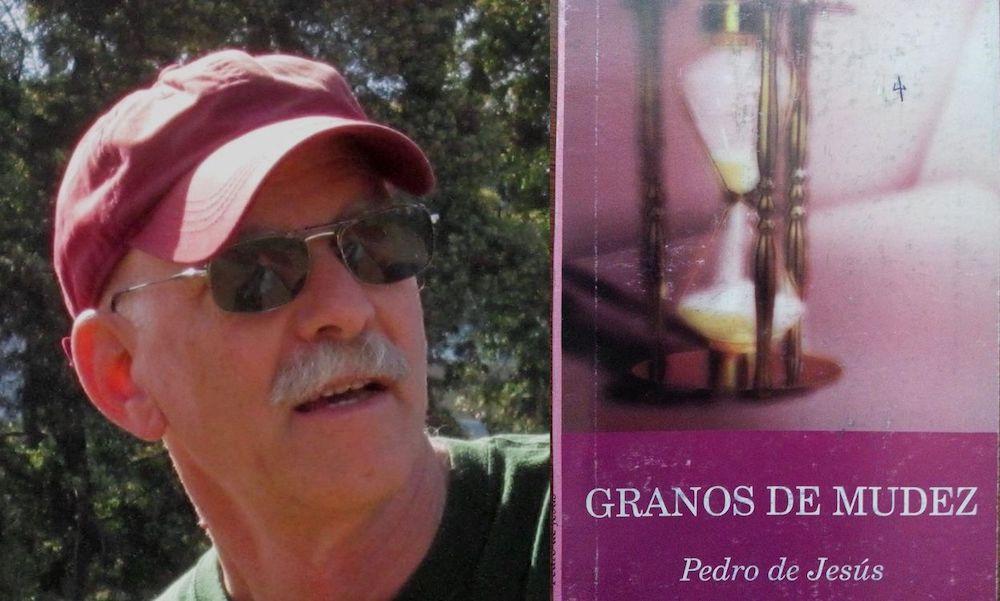
“If I could live . . .” appears in the collection Granos de Mudez, its title a reflection of the poems’ themes of silence and expression. Translator Dick Cluster comments:
“Grano” is equivalent to the word “grain,” with all its meanings in English, but it can also have other meanings such as bean or even pimple. “Mudez” is muteness, and in the title poem it refers mostly to what’s left unsaid amid what’s spoken, “the bits of muteness in your words.” In relation to the collection, it evokes silence about one’s sexuality, a silence de Jesús has broken, being one of the first Cuban writers to deal overtly with queer themes when that window cracked open in the 1990s. (Asymptote Journal)
Teaching English and Literature with “If I could live . . .”
When asked about his decision to leave “muchacho” untranslated within the poem, Dick Cluster explained:
Its dictionary meaning, when describing someone in 3rd person, is “boy” or “young man.” [. . .] BUT, here in the poem, it’s used as a term of endearment—the way “girl” sometimes is in English, but not usually “guy” or “boy” or “man” or “dude,” etc. So there’s really no good English equivalent, which is why I chose to leave it as “muchacho.”
Students in language or literature classrooms might discuss whether they agree with the translator’s choice, and then delve into other potential decisions around translation by comparing the Spanish and English versions of the poem. (This poem is ideal for students at a seventh or eighth grade reading level; lexile conversions can be found on our “For Educators” page.)
Other works that grapple with the limits of language in describing love include e. e. cummings’s poem “since feeling is first” and Raymond Carver’s story “What We Talk About When We Talk About Love” (an early draft is available in the New Yorker).
As a culminating project, students might write their own poems expressing ideas or emotions that are difficult to put into words. If students wish, their poems might include words from non-English languages.
Teaching Social Studies and History with “If I could . . . “
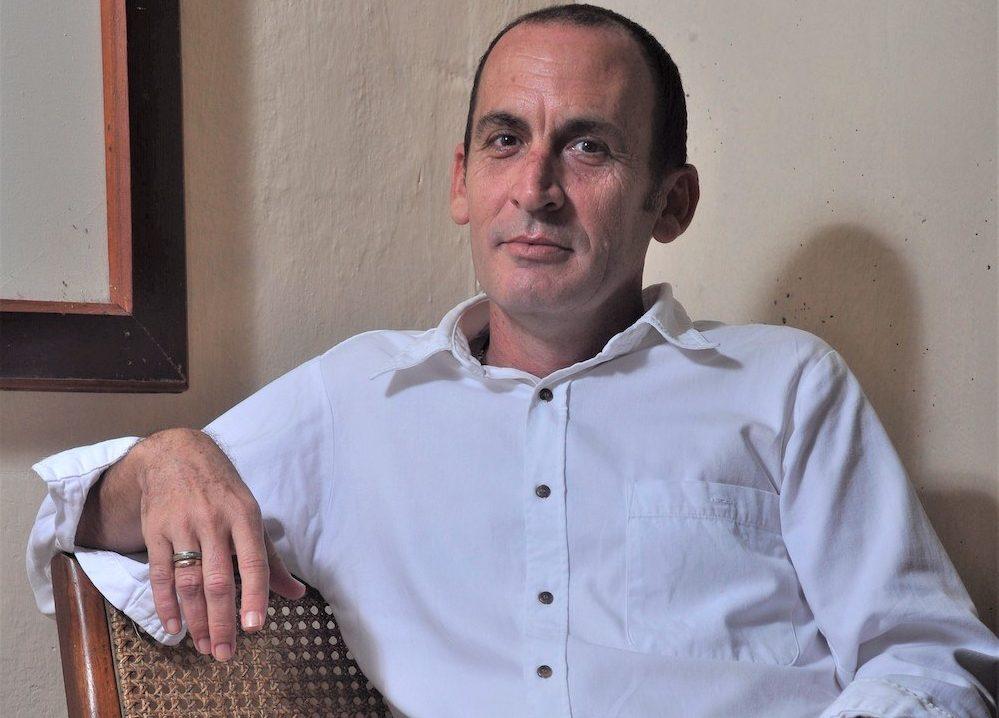
Pedro de Jesús was one of the first openly queer writers in Cuba, a country with a complicated history of LGBTQ+ rights. Students might compare that element of Cuban history with the history of queer rights in a different part of the world—perhaps your own—or with the struggle of civil rights among other groups.
To get started, students might explore the resources on LGBTQ+ life in Cuba below.
- In 2022, Cubans voted in favor of a referendum that legalized same-sex marriage in the country. Read more about the vote on CNN. Then, hear queer couples’ thoughts on the change in an article from openDemocracy. (This article is also available in Spanish.)
- Next, watch footage from the 2023 parade on Cuba’s Day Against Homophobia. The woman interviewed at 0:26 is Mariela Castro, a leading LGBTQ+ rights activist who is also the niece of former Cuban leader Fidel Castro and daughter of former president Raúl Castro.
- As the CNN article mentions, and as de Jesús hints in a Spanish-language interview with Cuba Profunda, Cuba wasn’t always an LGBTQ-friendly country. Read an opinion piece on the government-run forced labor camps that imprisoned many gay men in the 1960s and ‘70s.
By Nadia Kalman, with research and additional writing by Maggie Vlietstra.