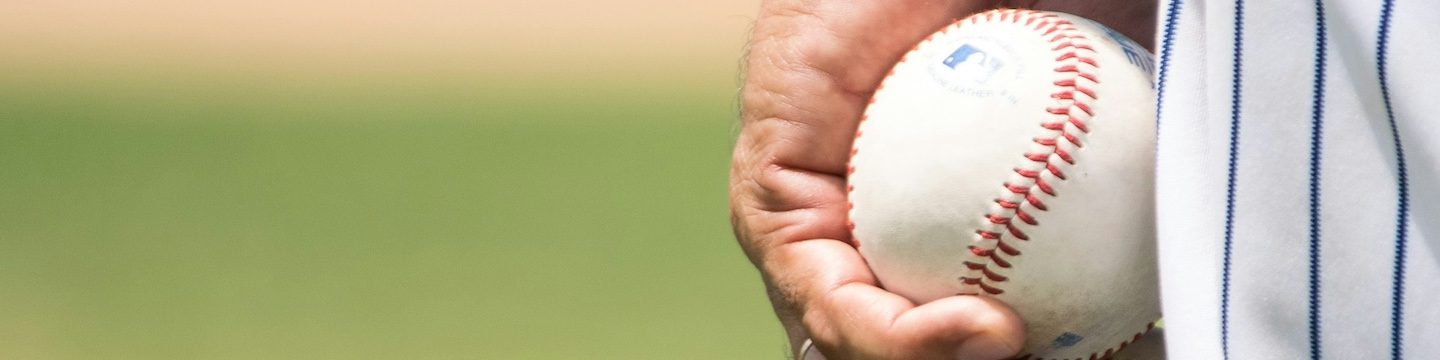


Swimming Upstream
Fiction by Eduardo del Llano
Translated from the Spanish by Dick Cluster
“I don’t like ballet,” the doctor admitted.
“OK,” Nicanor said, “but it’s different with me. It’s not that I don’t like sports, it’s that they don’t make any sense to me. Like I wouldn’t understand a salmon explaining why it has to migrate. I just don’t get a stadium full of people screaming with enthusiasm or outrage about eight guys who bang a leather ball around better than the other eight.”
“Nine.”
“Whatever. The point is that a playing field leaves no room for the spirit. An artist has talent, no doubt about that. So does a mathematician. But a ballplayer just runs or hits better than an ordinary guy. Tell me what that has to do with humanity.”
Nicanor was Rodríguez’s patient, but Rodríguez was out on leave. To describe Nicanor, suffice it to say he was skinny and bald with bad skin. Right away, part of the doctor took a dislike to him. The other part tried to be professional.
“Sports are a lot more than that. They’re struggle, strategy, teamwork. When a sprinter sets a record, when a guy jumps two-and-a-half meters as if he were made of rubber, there’s beauty in that. It’s about surpassing human limits.”
“OK, but in the wrong direction. You’re saying struggle and strategy. That’s the language of war.”
With apparent nonchalance, the doctor closed his newspaper, covering the sports page to which it had been turned. He checked his watch.
“O’Donnell, you’re not here to tell me your opinion about sports. That’s not a problem in itself. Maybe the fact that your position is so rabid, so reductionist . . .”
“I came to see you, doctor, because sometimes my soul leaves my body and reappears in the body of a baseball player in a tight situation.”
The doctor nodded ever so slightly, holding the patient’s eyes until he blinked.
“Your soul migrates. What did you say earlier about salmon?”
“Nothing,” the patient said curtly. “You’re not getting rid of me by telling me my mother forced me to eat fish when I was a boy. Which, by the way, isn’t true. What is true is that sometimes for a moment I transubstantiate into a baseball star.”
The doctor felt a brief attack of envy. One of these days, he thought with annoyance, I’ll have to ask Rodríguez to analyze me.
“What team?”
“Havana. The Industriales.”
“I see. And under what circumstances does this occur? Sometimes the most ordinary things can provoke fantasies. Fatigue, for instance, or problems with your wife, or sniffing ten or twelve lines of . . .”
“The weird thing is, it doesn’t happen to me. It happens to them. Typical situation: the Industriales have their backs to the wall at the end of the ninth inning, down three runs, but with the bases loaded and their last hope at bat. In that situation, it’s almost a sure thing that my soul is going to take part in the game.”
“And you strike out.”
“No. I hit a spectacular home run. I’m conscious the whole time of being an intruder in a foreign body. I’ve got this tension, you know, like I’m about to be found out. The way to dissolve the tension is by swinging. Generally I hit it out of the park.”
“And the player’s soul? Where does it go in the meantime? Into your body?”
“For me to answer that, you’d have to prove that baseball players have souls. Anyway, the thing isn’t that symmetrical. My body faints. Maybe the ballplayer’s soul sits in the grandstand and watches.”
“And does your soul choose to emigrate into any player in particular?”
“It used to, but he left the country. In fact, I think it’s thanks to my soul that he’s now a Major League star. But the thing doesn’t work over such a long distance, so now he’s got to take care of himself.”
The doctor twisted the table lamp so its beam pointed at the other man. He began waving a pencil.
“Concentrate on this. You’re getting tired. Your eyelids are heavy. You want to sleep. When I say one-two-three, you’ll fall into a deep sleep. One. Two. Three. What do you feel?”
“I’m a big fish. I’m swimming against a cold current.”
“A salmon?”
“No, a manjuarí.”
“The Cuban pike? But pike don’t migrate.”
“How should I know that? I’m just a fish, I do what my instinct tells me. If you want to discuss ichthyology . . .”
“All right, you’re a pike and you’re migrating. What’s happening now?”
“I’m in the sea. On shore there’s a group of boys playing baseball.”
“The manjuarí lives in fresh water.”
Nicanor shook his head and shrugged his shoulders.
“So hypnosis isn’t going to work. Give it up.”
The part of the doctor that disliked the patient now hated him intensely, and that part had become much larger. He checked his watch again.
“Look, your case isn’t as unusual as you think. It’s true that a Cuban who doesn’t like baseball is a strange phenomenon, but on a deeper level, what are we dealing with here? Rejection and fascination, desire and taboo. It’s a clear case of what we could call . . .”
“Turn on the television.”
“What?”
“Obviously you don’t believe me. I came here today for a reason. Everyone—even me—knows that the championship series just got underway and the first game is being played right now, here in Havana, against Pinar del Río. You’ve already looked at your watch several times. I know you’re dying to know the score, to watch. Turn on the TV.”
The doctor did as he was told.
The Industriales were about to lose. It was the bottom of the ninth, and they were three runs down, but they had the bases loaded. A sinewy light-skinned black man stood in the batter’s box.
“Watch,” Nicanor said, and fainted.
A subtle change seemed to come over the batter. He glanced around as if disoriented. The way he was gripping the bat didn’t even look right.
So what, the doctor thought. Naturally the batter is nervous. It’ll take more than this, Nicanor O’Donnell, to get me to fall for the act you’re putting on.
The pitcher delivered a wide, lazy curve.
Thwack.
The doctor had never seen such a stupendous blast. The ball was still gaining altitude when it cleared the scoreboard. All four players trotted home as the stands went wild. When the batter reached home plate, he leaned over, stared triumphantly into the camera, and drew something in the dirt next to the batter’s box.
A fish.
That was all. Nicanor woke up.
“Now do you believe me?”
It took the doctor almost a full minute to unclench his jaw.
“That was . . . wow, I have to admit . . .”
“Impressive, right?”
“And you want these . . . episodes . . . to cease?”
“Of course not, doctor. What are you talking about? I want you to back me up scientifically. I’m planning a conversation with the Industriales management about charging them for my interventions. The fact is, however well the team has done, it’s thanks to me.”
“But you hate sports.”
“I detest them. But it would be stupid not to take advantage of this phenomenon.”
A faint smile appeared on the doctor’s face.
“Agreed. Come back tomorrow.”
As soon as Nicanor left the room, the doctor pressed a button on his intercom.
“The patient who just left my office is dangerous, he must be admitted at once. Keep him isolated, make sure he can’t listen to the radio or watch television. Above all, make sure he doesn’t fall asleep, even for a minute, until I say so. If he looks like he’s losing consciousness, give him a good jolt of electricity.”
The doctor cut off the intercom and stared into space.
He whispered, “Pinar del Río, go team, all the way.”